

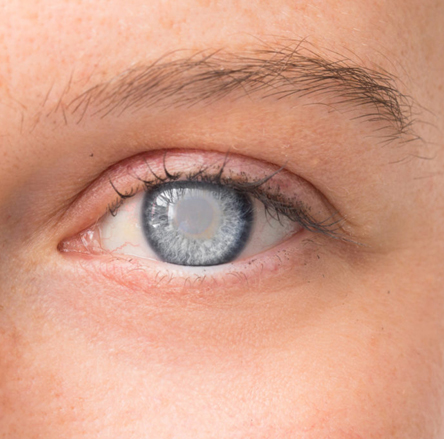
Cataracts Overview
Cataracts are cloudy areas in the lens of the eye that can cause changes in vision. Symptoms of cataracts include cloudy or fuzzy vision as well as sensitivity to glare. Cataracts are treated with surgery.
What Are the Symptoms of Cataracts?
Cataracts usually form slowly and cause few symptoms until they noticeably block light. When symptoms are present, they can include:
- Vision that is cloudy, blurry, foggy, or filmy
- Progressive nearsightedness in older people often called “second sight” because although their distance vision is deteriorating, they may no longer need reading glasses.
- Changes in the way you see color because the discolored lens acts as a filter.
- Problems driving at night such as glare from oncoming headlights.
- Problems with glare during the day. Double vision while looking through the eye with a cataract (like a superimposed image).
- Sudden changes in glasses prescription.
What Causes Cataracts?
The eye functions much like a camera. Light rays enter the eye, passing through the cornea, the aqueous humor transparent fluid in the front of the eye and then the pupil and into the lens. The lens bends the light rays to focus objects onto the retina lining the back of the eye. From there, the image passes through the retinal cells, into the optic nerve, and finally to the back of the brain which process the images.
Cataracts occur when there is a buildup of protein in the lens that makes it cloudy. This prevents light from passing clearly through the lens, causing some loss of vision. Since new lens cells form on the outside of the lens, all the older cells are compacted into the center of the lens resulting in the cataract.



Comments are closed.